A guided course from Growing Up Boulder
Make a map of your city
with the children who live in it.
Five stages, from first conversation to printed map. You will do the work alongside your own partners and young people — the course supplies the research, the templates, and the order to do them in.
Join the Community discussion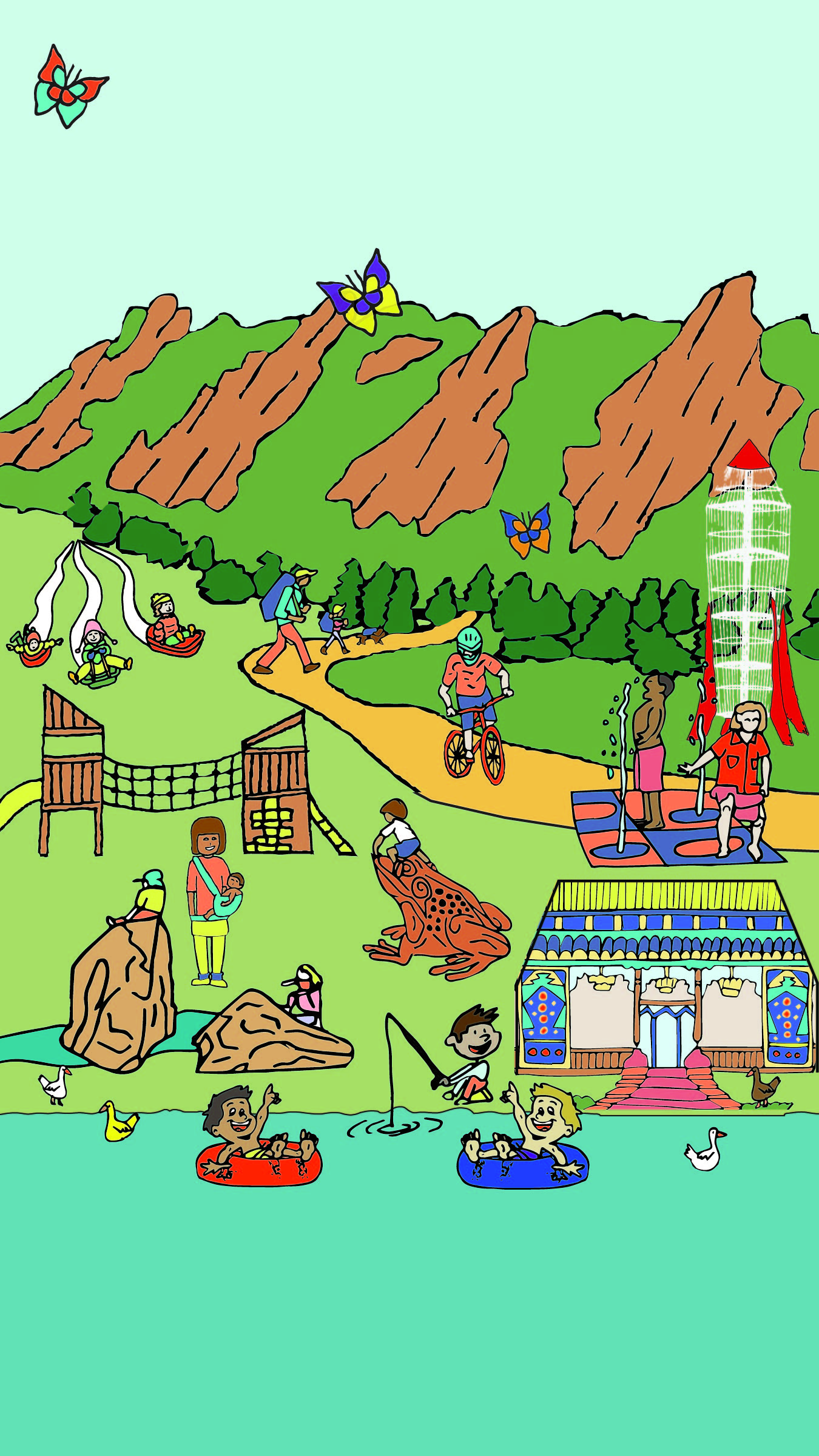
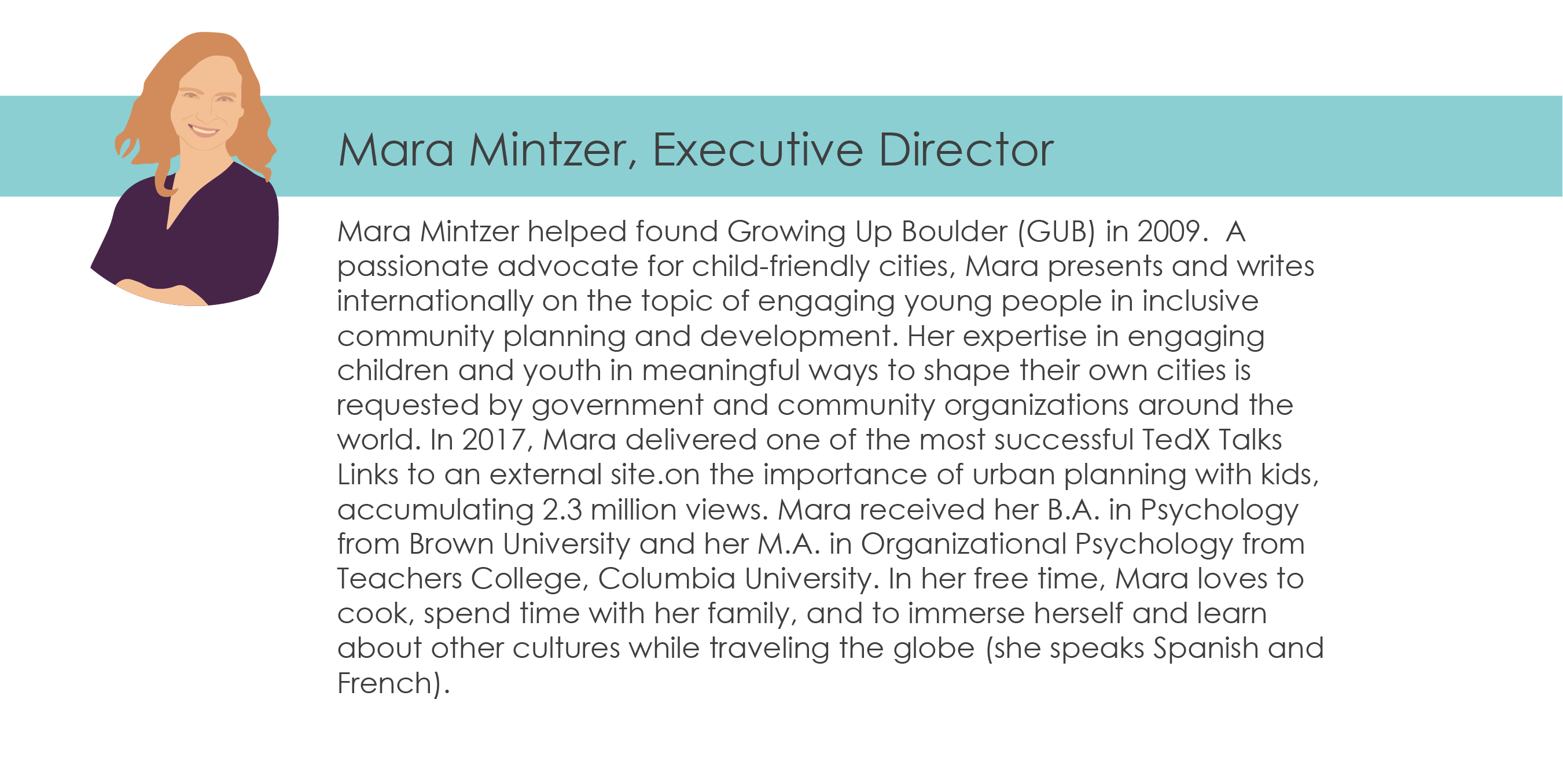
Mara Mintzer, GUB Executive Director, welcomes you to the course and explains what a child-friendly map is, and some of the benefits of having one in your community.
Course overview
We're happy to take this journey with you in supporting you and your colleagues to make your own child-friendly city map.
The course is designed to fit your needs. You can build your map as you move through each stage, or work through the whole course first and start the map afterwards — your choice. There are readings and research activities to build your background knowledge, and templates, activities and guidance for putting that knowledge into action in your own community.
By the end, you and your map team will have everything you need to make your city's own child-friendly city map.
The route
Five stages, worked through in order. Open a stage to see what is in it.
- 1.0Overview of Stage ①
- 1.1Red and Green Frames
- 1.2Child-Friendly Cities Initiative Quiz
- 1.3Explore CFC Maps From Around the World!
- 1.4Identifying the Benefits of a Child-Friendly City Map
- 1.5Interviewing Community Members
- 1.6Drafting Your City's CFC Map Abstract
- 1.7Drafting Your City's CFC Map Mission Statement
- 1.8Drafting Your City's CFC Map Parameters
- 1.9Asset Mapping to Identify Potential Map Partners
- 1.10Identify Potential Map Designers
- 1.11Funding Considerations
- 1.12Prepare Course Materials!
- 2.0Overview of Stage ②
- 2.1Research Participatory Planning
- 2.2Six Key Principles of Youth Engagement
- 2.3Principle 1: Start with Equity
- 2.4Principle 2: Meet Youth Where They Are
- 2.5Principle 3: Create an Asset-Based Youth Engagement
- 2.6Principle 4: Use a Variety of Methods to Engage a Variety of Learners
- 2.7Principle 5: Be Transparent About the Process and the Outcomes
- 2.8Principle 6: Reflect, Evaluate, and Adapt
- 2.9Review Slide Deck and Agenda
- 2.10Review Equity Matrix
- 2.11Complete Activities 1 and 2
- 2.12Review Lesson Plan 1
- 2.13Create Caregiver Survey
- 2.14Prepare to Collect Partner Data
- 2.15Schedule and Hold Partner Meeting 1
- 2.16Share Plus/Delta from Partner Meeting 1
- 2.17Ways to Deepen Engagement After Partner Meeting 1
- 2.18Mid-Point Course Reflection and Check-in with GUB
- 3.0Overview of Stage ③
- 3.1Overview of Data Analysis and Map Drafting Process
- 3.2Working with your Map Designer
- 3.3Collect Data from Partner Engagements
- 3.4Value Based Coding and Design
- 3.5Analyze Youth Notecatchers
- 3.6Analyze Youth Favorite Place Drawings
- 3.7Analyze Caregiver Surveys
- 3.8Analyze Partner Meeting 1 Data
- 3.9Share Data with Map Designers
The key
Every item asks for one of four kinds of work. The marker beside it tells you which, before you start.
Experience
Live the map-making process yourself, and try the outreach activities you will later lead with youth.
Research
Short readings, videos, and examples covering the Child-Friendly Cities movement and how GUB built its own map.
Deepen understanding
Written reflections and discussion prompts that consolidate what you just researched. Never graded.
Create
Work through a template to produce a real guiding document for your own city.