Stage 44.1PageDeepen understanding
Iterative Design: Outreach, Analyze, Draft
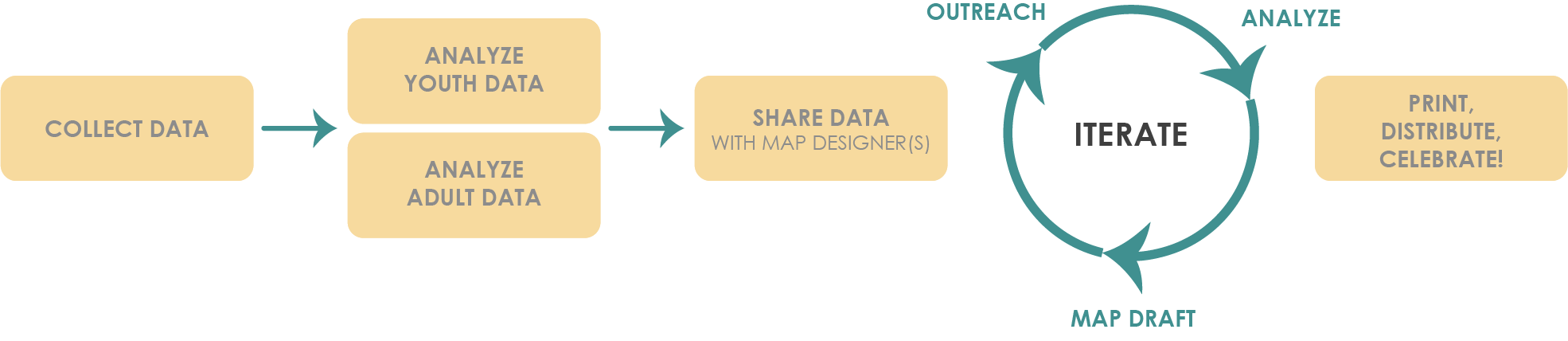
| When you have gotten to this stage, you have clarified the goals of the map, identified map designers, collected and analyzed map data, and shared that data with your designers and created a first draft of the map. Congratulations! Drafting your first map is a satisfying team accomplishment, and we hope sharing it with children and youth in your community will be a thrilling experience. A vital part of designing a CFC Map is ensuring that children and youth are involved in as many stages as possible. Now that you have a draft, it is important to share it back with your community to get their feedback. We can tell you that the youth will be very excited to see the map come to life! Gathering feedback doesn't happen as a single event. It can happen many different times and ways and you can continue to improve upon the map based on your community's feedback. | 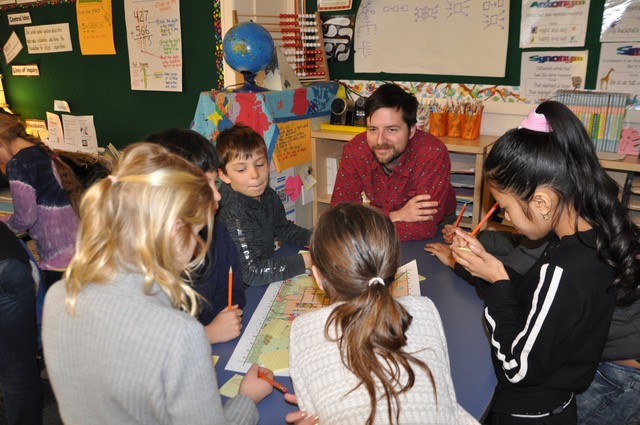 |
Iterative Design
Now you have entered the iterative part of the map design. The iterative process is the practice of building, refining, and improving a project, product, or initiative. The iterative process includes three steps: Outreach, Analyze, and Draft Map.
Outreach
In 4.2 | 👣 Outreach with Partners, 4.3 | 👣 Outreach with Public and 4.4 | Outreach with Sponsors we have outlined different types of outreach that will generate reflections and feedback on the map draft. Some of the questions you’ll ask young people and adults for feedback will be: What do young people like about the map? What do they like but they have suggestions for improvement? What is missing that they recommend adding? What suggestions do they have for each part of the map–the colors, key, illustrations, icons, landmarks?
Analyze
Much as you did with the initial data collected from your partners leading Lesson 1 with youth and you sharing the Caregiver Surveys, you will analyze the data that you collect during the outreach sessions and share that analyzed data with your map designers so they can create a new map draft. This process won’t be as labor intensive as the first data analyzes you did, and it likely will involve more discussion and reflection between your team and the map designers to determine what design and content changes you should make to ensure the map is child-friendly.
Draft
Each time you get new feedback from an outreach session, you have an opportunity to create a new draft. This is a very iterative process and will likely involve many cycles before you feel like your team has reached the first draft that you are ready to print and share with the broader community.
The number of times you gather feedback and make a new map draft is completely up to you. Regardless of how many iterations your team decides to do, the goal is to work with several groups each time, gather significant feedback, and then work to make the map better.
Preparing for Outreach
As you prepare to conduct outreach to collect feedback, we recommend thinking through the following:
- As a team, first think about your timeline. Ask yourselves: How much total time have you set aside for the entire project and how much of that time do you want to be involved in drafting and getting feedback?
- First, reach out to your partners and schedule map feedback sessions for draft map 1. Schedule as many as you have time for.
- Think creatively about how you can reach children and youth you didn’t reach with your partners. This might included hosting outreach events at libraries, hosting a booth at community events, sharing the map digitally and more!
- Remember, you are designing a child-friendly city map. If you take the time to listen deeply and with care, the feedback you gather will go a long way to inform a better next draft.
Our map designers engaged with children and youth in classrooms to hear first-hand what young people’s ideas and thoughts were. Young people LOVED meeting the map designers and Abe and Alex LOVED meeting the young people! They have shared their thoughts on the iterative design process below.
What did the iteration process looks like throughout the draft map-making process?