Stage 44.3PageExperience
Outreach with Public
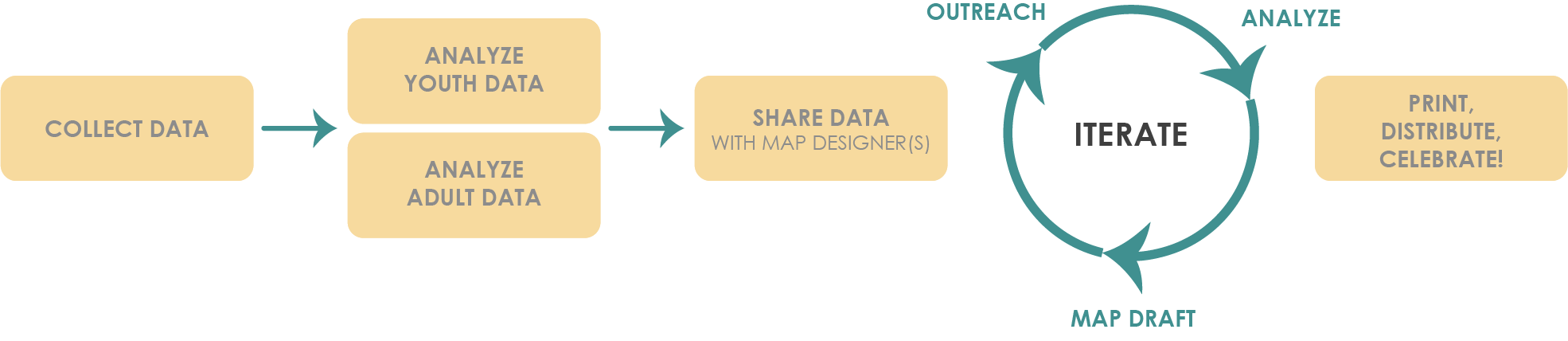
Not all perspectives from children and youth will be captured by working with your partners. To fill these gaps and ensure equity and inclusion is centered in your map design, we recommend finding ways to conduct outreach with the broader public at events where different youth and families might be gathered. Below, we have outlined the suggested steps for outreach, analyzing, and drafting when working with the public. We recommend that you: 1) Look for citywide events that are happening (festivals, fairs, farmers markets, back to school nights, city department hosted events) 2) Reach out to your local children's museums and other family venues to see if they want to collaborate 3) Ask nonprofit organizations that have yet to participate 4) Find spaces like parks and libraries where you can host an informational table The idea of conducting outreach with the public is to expand your reach and get new perspectives to inform your second draft. Think in terms of diversity of opinions and lived experience so that you feel good about the extent to which you reached all community groups in this process. Two GUB ways that we reached out to the public included tabling at the Boulder Farmer's Market and joining a bilingual family event at the Museum of Boulder. The general process for working with the public is similar to that of the partner feedback sessions, except when you work with the public sector, you SIMPLIFY the feedback process. Step 1 - Schedule Outreach with PublicDepending on how much time you have to conduct outreach, analyze feedback, and create map drafts, you can determine how many public outreach sessions you want to have and how far apart you would like to schedule them. We recommend conducting at least one so that you can reach youth and families who did not participate in Lesson 1 with your partners. Step 2 - Conduct Outreach with PublicHere is the general shape of a possible Public Feedback Session:
Step 3 - Analyze Feedback from Public Feedback Sessions
Step 4 - Map Draft
Step 5 - Iterate
|
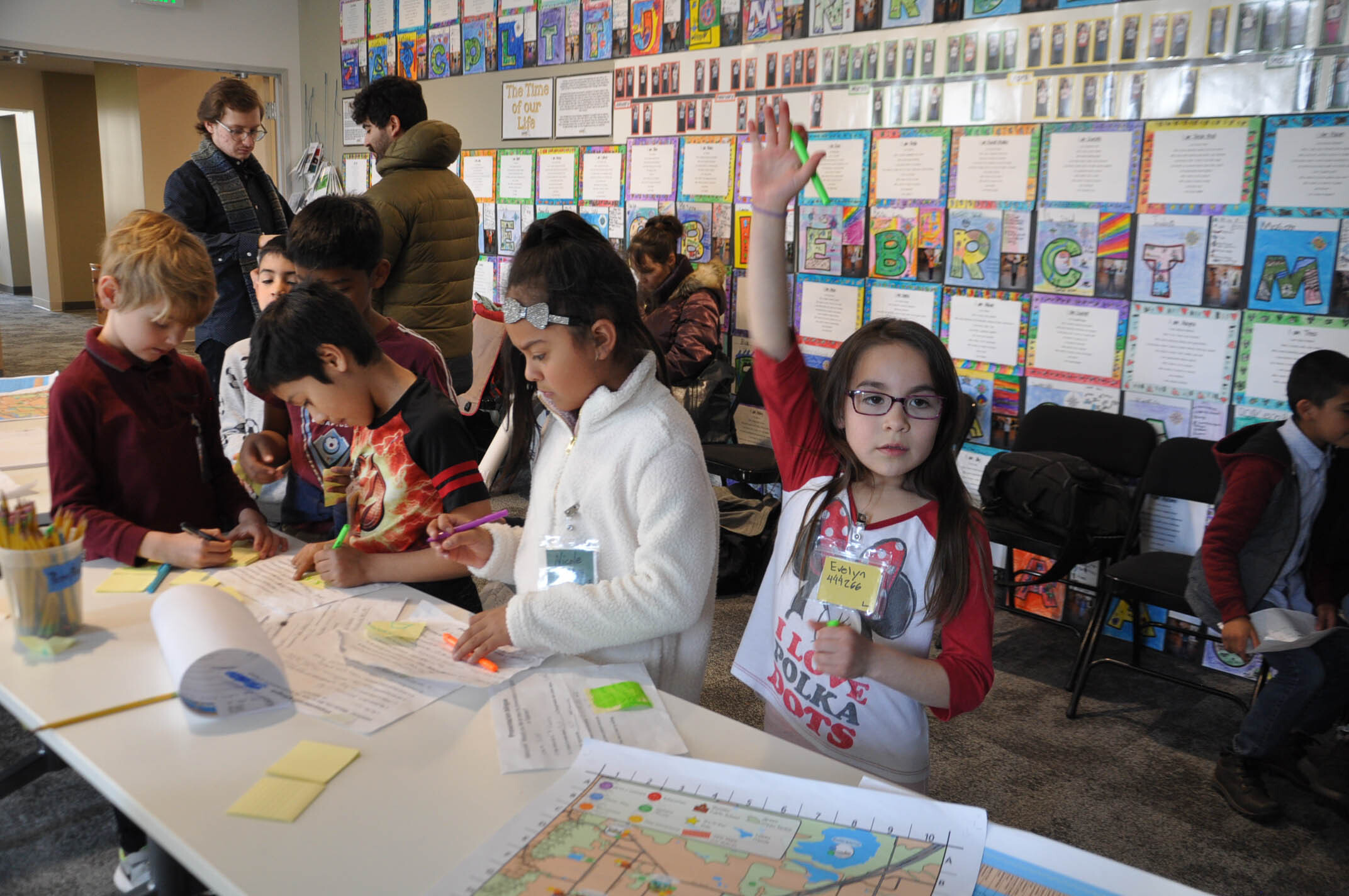
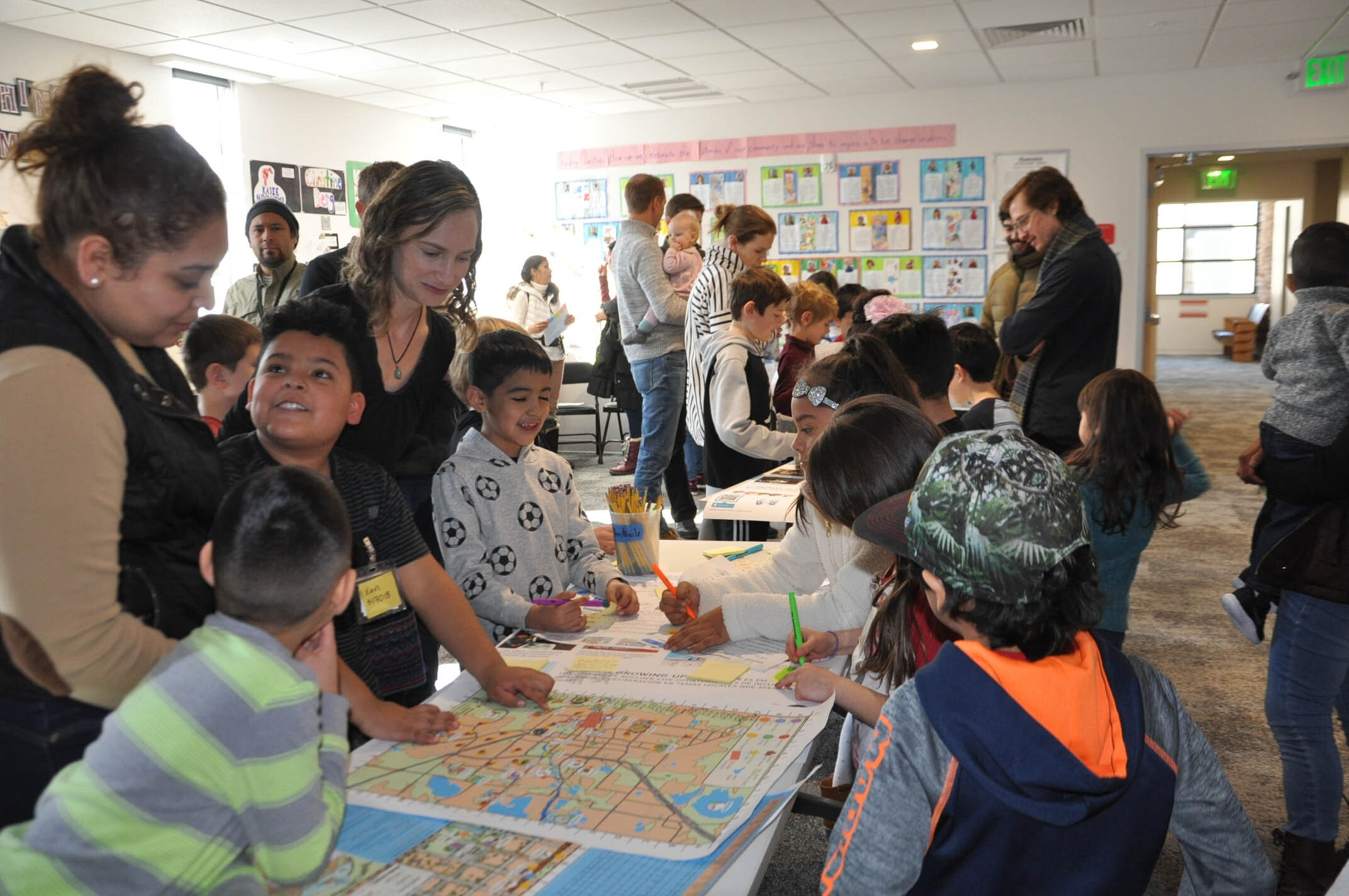
The above photos at the Museum of Boulder capture GUB's public outreach with University Hill Elementary School's Bilingual Showcase. Young people and their families provide feedback for map draft 1. |