Introduction0.3Page
Course Timeline

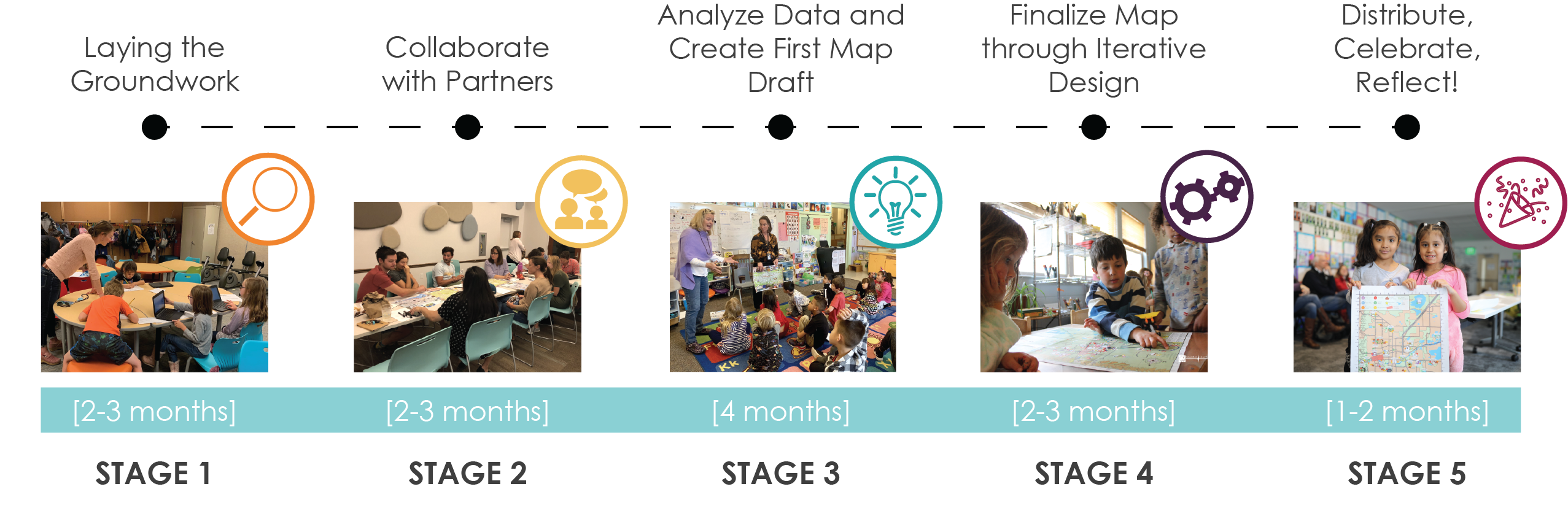
The infographic below provides time estimates for each stage of the map-making journey, with a total of 11-15 months to create a Child-Friendly City Map from start to finish. Estimates are based on GUB’s own map-making process. However, for your map-making journey, there will be many factors which will affect the overall timing of your project. For example:
- How many groups of children and youth will you partnering with?
- How deep will your engagements with young people be?
- How much time each week will you have to dedicate to the map project?
- How quickly will you be able to mobilize partners, youth groups and map designer/s?
- How many iterations (drafts) of the map will you decide to have?
Examples from GUB’s process:
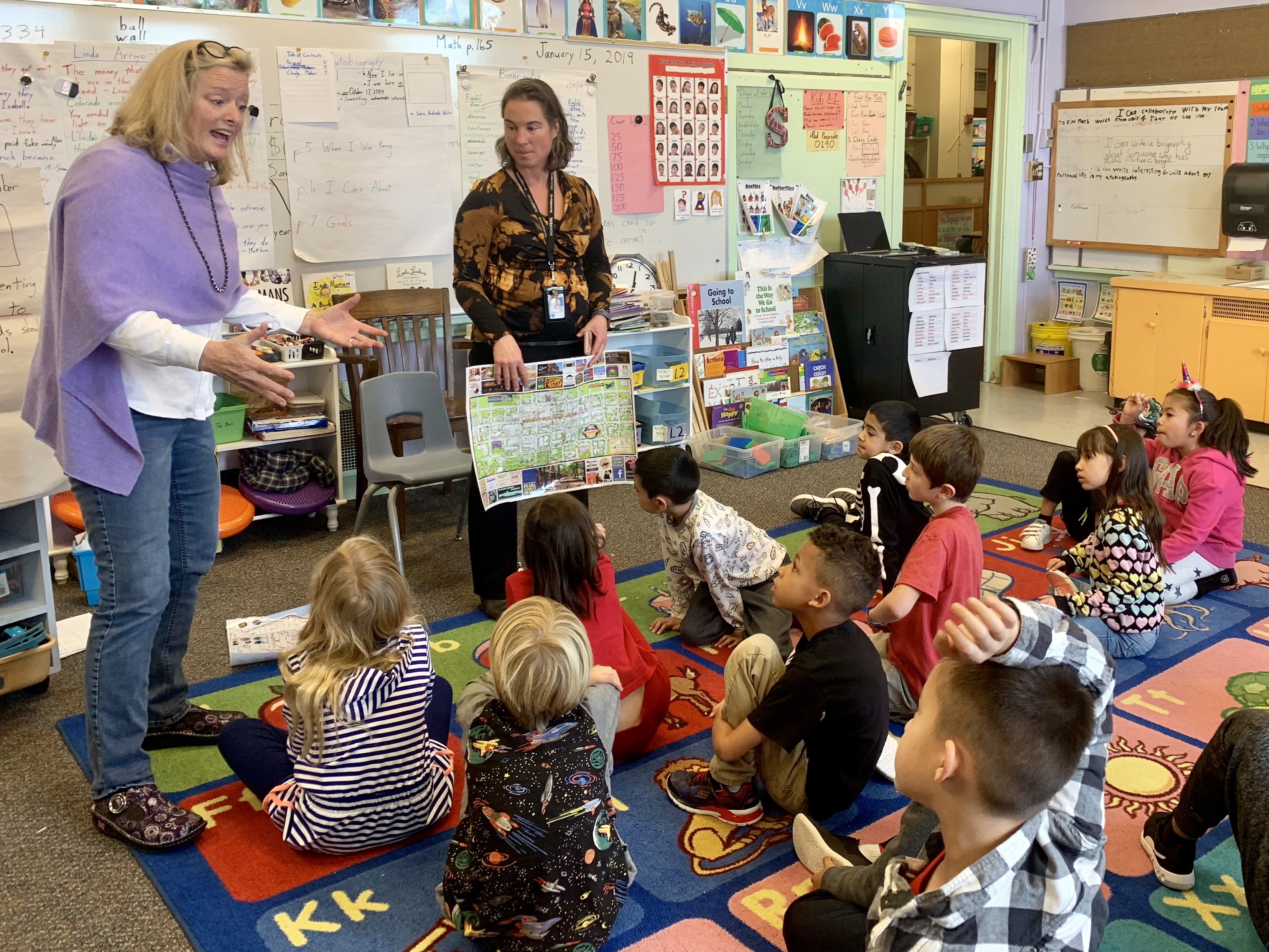
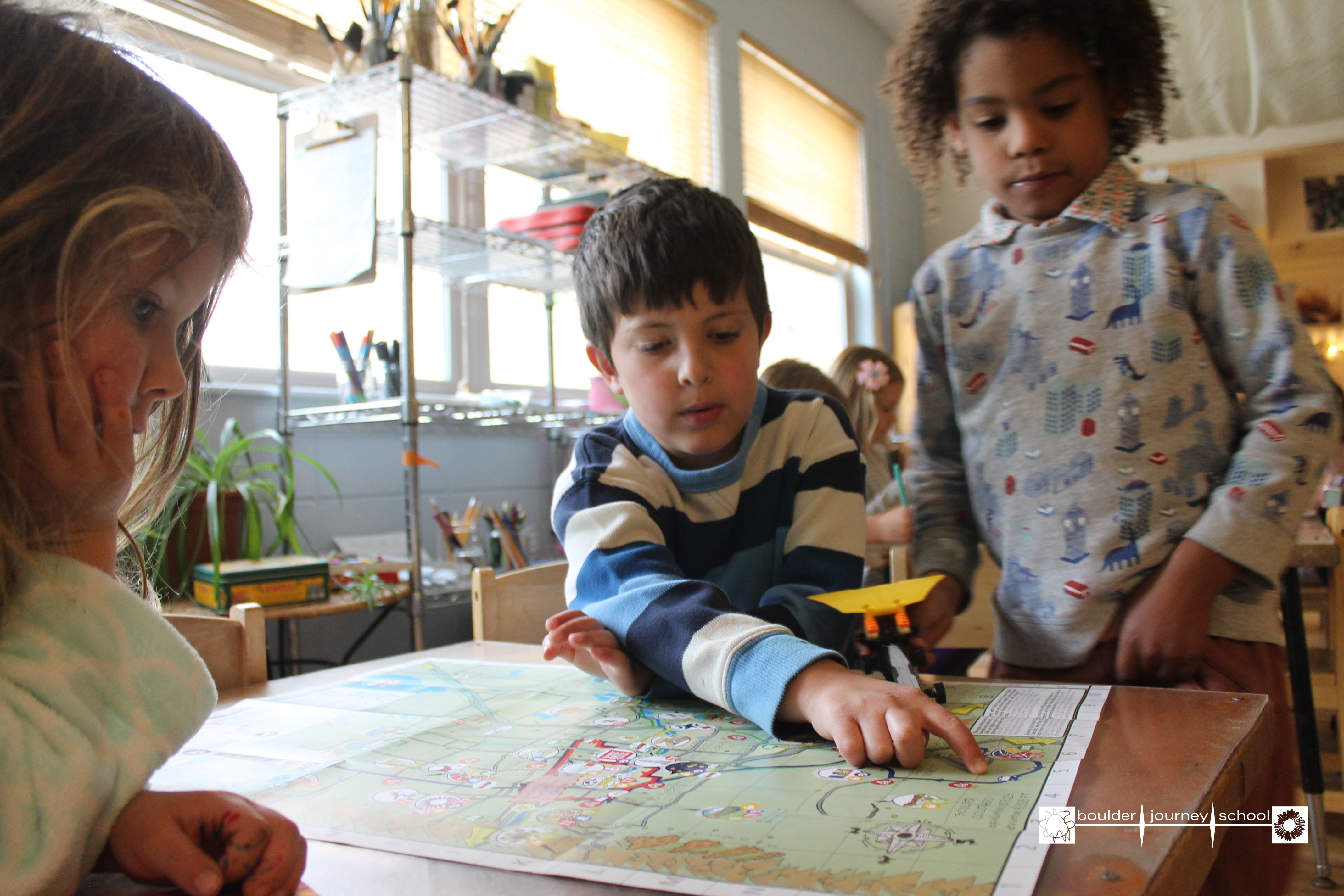
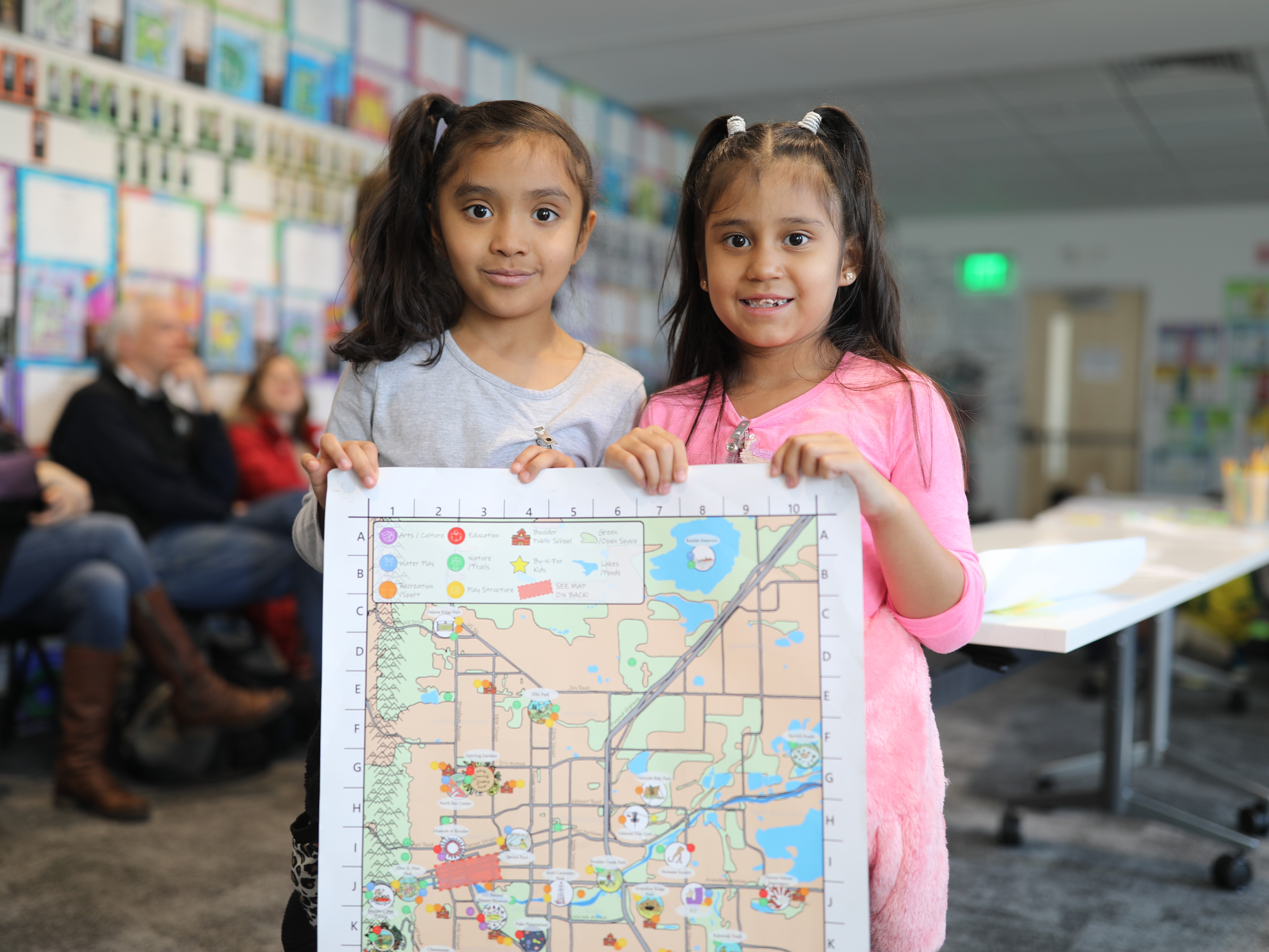
For GUB, it was important for us to hear from caregivers of children 0-5 and children and youth 6-12, AND we wanted to give our many partners an opportunity to be engaged with the work. Given the great number of partners, this took considerable time. Also, we were very committed to the idea of the map making process being an iterative one; we went back to groups of youth and asked them what they thought of various map drafts, and we ensured that we captured their ideas in map drafts and gathered any important feedback along the way.
 | ||
|  | |
 | ||
|  | |
 | ||
|  | |
 | ||
|  | |
 | ||
|  | |